16 November 1855 – 29 November 1922
Ernest Westlake was one of the five ‘founding fathers’ of the Hampshire Field Club. His primary interests were geological, but an enquiring mind and the freedom to devote time to his pursuits enabled him to collect specimens on the grand scale and accumulate a wealth of data that spilled over into early human history.
Westlake was born at Fordingbridge into a Quaker family. His father, Thomas, was a successful sailcloth manufacturer with unrealised scientific ambitions, who put his business activities first. When his son showed no aptitude for commerce, he was encouraged to attend University College, London, studying geology and mineralogy, although he left without gaining a degree.
On his return to Hampshire, he surveyed numerous chalk and gravel exposures, recording sites in detail. Interest in flint implements in the area had begun as early as 1879 and the realisation that different tools represented different periods of the past encouraged him to collect them widely. He inevitably found himself drawn into the great ‘eolith’ debate*.
In 1891 he married Lucy Rutter from Mere, a fellow Quaker, and they moved to Sandy Balls, Godshill, in the New Forest. Westlake was described as having a ‘retiring disposition’ but by 1909 he forsook Quakerism in favour of the ‘old gods’ of paganism and seven years later founded the Order of Woodcraft Chivalry, a scout-like movement, without the military overtones. Although considered a ‘somewhat eccentric personality’ (he compiled a Bibliography of the Divining Rod, c 1100 – 1900) Westlake’s notebooks and memoranda show him to have been a naturalist and pre-historian of the highest order.
Westlake died as the result of a road accident in London on 29 November 1922.
* eoliths, or ‘dawn stones’ were once thought to have been the earliest man-made tools but are now known to be ‘geofacts’ produced by natural geological processes such as glaciation.
Sources
-
Delair, J B (1985) Ernest Westlake, founder member of the Hampshire Field Club,Proc Hants Field Club & Archaeol Soc, 41, 37-44
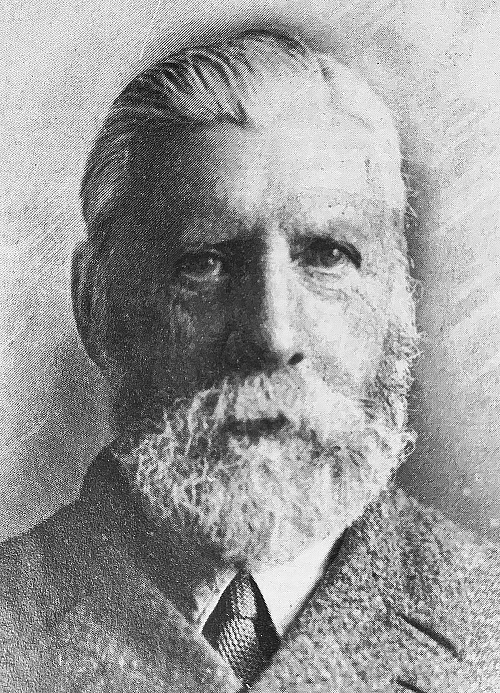
Portrait
Contribution to county’s history
Westlake’s primary interests were in geology and the natural sciences, but his collecting and recording spilled over into flint implements and the study of early human species, particularly in the Avon Valley area.
Relevant published works
-
Westlake E (1902) Note on Recent Discoveries of Palaeolithic and Eolithic Implements in the Valley of the Avon, Fordingbridge.
-
Westlake E (1903) The Antiquity of Man in Hampshire, Fordingbridge Almanac, ed King.
Critical Comments
Other Comments
Contributor
Dave Allen, August 2022
Key Words
eoliths, Avon valley, flint tools, geology
If you are able to add anything to this entry, please send your ideas to celebrating@hantsfieldclub.org.uk.